
Adding a Bathroom to Your Denver Basement: What It Costs and How It Works
Why a Basement Bathroom Changes the Whole Project
Of all the questions that come up during a Denver basement finishing consultation, one comes up more than any other: can we add a bathroom? The answer is almost always yes. But what it costs, and what it requires, varies significantly depending on one critical factor — whether your basement already has a plumbing rough-in.
Does Your Basement Already Have a Rough-In?
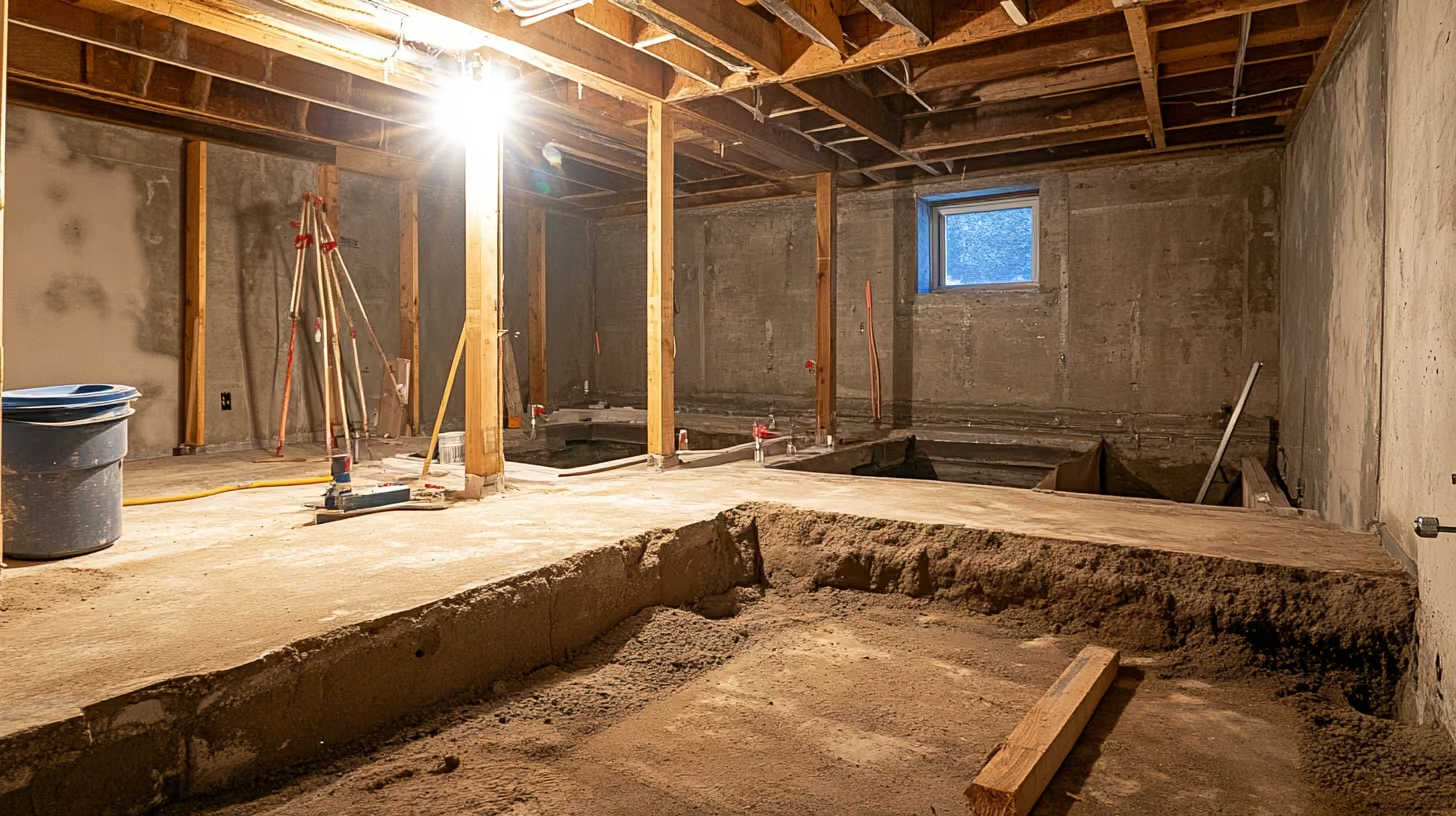
Many Denver homes built after the 1980s were roughed in for a future basement bathroom during original construction. A rough-in means the drain line, water supply lines, and sometimes a toilet flange are already in place, capped off under the slab or stubbed up from the concrete floor. If your basement has a rough-in, adding a bathroom is a straightforward plumbing connection — the expensive and disruptive infrastructure work is already done.
If your basement does not have a rough-in, the plumbing has to come from scratch. That means either breaking up the concrete slab to trench new drain lines to connect to the main building drain, or installing an above-floor macerating toilet system (less preferred) or an ejector pump system (the standard solution for Denver basements).
Before any bathroom planning happens, a licensed plumber should assess your basement to determine which situation you are in. This single piece of information has the largest impact on your budget.
Ejector Pumps: What They Are and When You Need One
Denver homes built on flat lots where the basement floor sits below the main sewer line often cannot drain a basement bathroom by gravity alone. An ejector pump (also called a sewage ejector) collects waste in a sealed pit beneath the basement floor and pumps it up and out to the main drain line when the pit reaches capacity.
Ejector pumps are reliable, widely used, and permitted in Denver without issue. They do require regular maintenance — the pump should be inspected annually — and the pit must be properly vented. A properly installed ejector system adds $1,500 to $3,500 to the project cost and has a lifespan of 7 to 15 years before the pump motor typically needs replacement.
Not all basements need an ejector pump. If your main drain line runs lower than your basement floor (common in older Denver homes with deep foundations or those on sloped lots), a conventional gravity drain may be possible. Your plumber will determine this during the assessment.
What a Basement Bathroom Addition Costs in Denver
Adding to an Existing Rough-In: $8,000 to $18,000
If the rough-in is in place, the bathroom addition involves: framing the bathroom walls, plumbing connections to the existing rough-in, installing a toilet, vanity, and sink, shower or tub installation with tile work, electrical for lighting and exhaust fan, and drywall and finishing. For a simple 3-piece bathroom (toilet, sink, shower), this range covers most projects at a mid-range finish level.
New Plumbing from Scratch (No Rough-In): $15,000 to $30,000
When new plumbing infrastructure is required, the cost increases significantly. Breaking up and repairing concrete slab for drain line trenching typically runs $3,000 to $7,000 for a bathroom-sized scope. Add an ejector pump if needed. Then layer the same finish costs as above. Complex drain routing or longer runs to reach the main building drain add further cost.
Full Basement Finish with Bathroom: $35,000 to $75,000+
Most homeowners add a bathroom as part of a complete basement finishing project rather than as a standalone addition. In this context, the bathroom cost is one line item in a broader project. Our Denver basement finishing cost guide covers the full scope of what a complete basement finish runs in 2026.
The Permit Process for a Basement Bathroom in Denver
A basement bathroom addition requires permits in Denver for both plumbing and electrical work. The permit process for a bathroom addition within an existing finished basement is typically straightforward — plan review is usually 2 to 4 weeks for a residential plumbing permit. If the bathroom is part of a larger basement finishing scope, all permits are typically pulled together.
Pulling permits matters. Unpermitted basement bathrooms show up in home inspections and create complications in sales, insurance claims, and future remodeling work. A licensed plumber pulls their own permit — you should never be asked to pull a plumbing permit as the homeowner for work a contractor is performing.
Design Considerations for Denver Basement Bathrooms
Ceiling Height
Denver's building code requires a minimum ceiling height of 7 feet in habitable spaces. For bathrooms specifically, this applies to the area directly above the toilet and shower. If your basement has low ceilings — common in older Denver ranch homes — this can constrain your bathroom layout and, in some cases, your finish options for the shower.
Ventilation
Basement bathrooms require mechanical exhaust ventilation. The exhaust fan must vent to the exterior — not into the ceiling space or attic. In a basement, this typically means routing ductwork up through the first floor and out through a side wall or roof penetration. The routing distance affects both cost and fan selection.
Natural Light
Egress windows can bring natural light into a basement bathroom if the layout permits. More commonly, basement bathrooms are fully interior with mechanical ventilation and recessed lighting. A well-designed lighting plan — layered with task lighting at the vanity and ambient lighting in the space — makes a windowless bathroom feel significantly less constrained.
Is It Worth Adding a Bathroom to Your Denver Basement?
A finished basement with a bathroom adds meaningfully more value than a finished basement without one in Denver's market. Buyers consistently identify the bathroom as a primary factor in whether a basement functions as livable space. The cost-to-value ratio for basement bathrooms is among the strongest of any remodeling project in the Denver metro.
At Denver Dream Builders, we assess basement bathroom feasibility during every basement consultation — including a plumber walkthrough to determine rough-in status before we put a number on paper. Start with our Denver basement finishing guide to understand the full scope of what a basement project involves.